Have you tried using brain breaks in your classroom? Classroom brain breaks can be a great way to reset energy levels, improve focus, and build a sense of community among students. More than just a simple pause in instruction, brain breaks can impact students’ ability to retain information and engage more actively in learning.
In today’s blog post, we’ll explore what brain breaks are, why they might be a good fit for your group, and how to incorporate brain breaks into your routine.
What is a Brain Break?
A brain break is a short mental and physical break from academic work that helps students refocus and reenergize. These breaks provide an opportunity to step away from intense cognitive tasks and shift focus to something lighthearted, creative, or movement-based.
Classroom brain breaks can be especially effective when students are working through challenging lessons. These small moments can help reduce frustration and increase motivation.
Teachers use brain breaks for many reasons, including:
- Helping students refocus after extended periods of concentration
- Building community and fostering collaboration
- Resetting the energy in the classroom
By strategically incorporating classroom brain breaks into your day, you can create a more productive and engaging learning environment.
Classroom Brain Break Strategies and Resources
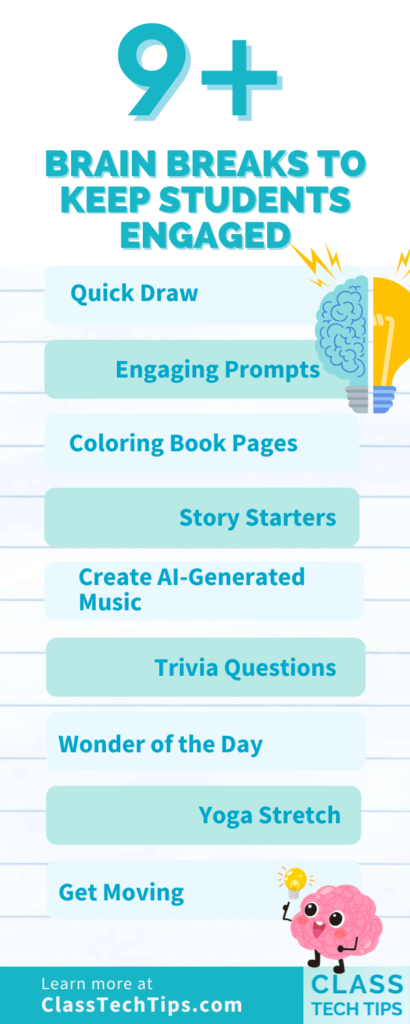
The way you introduce brain breaks will depend on your students’ ages, interests, and learning needs. Below are some strategies and resources to bring brain breaks into your classroom. And at the end of the post, I’ve included an artificial intelligence connection, too!
Quick Draw
Encourage creativity by asking students to do a quick sketch related to a fun prompt. The goal isn’t artistic perfection but rather a playful opportunity to take a break from traditional learning. This could certainly be an offline activity, or you might make an EdTech connection.
For example, you can use digital tools like Nearpod and Seesaw or simply have students use paper and pencils to create their drawings. If time allows, consider letting students share their sketches in pairs or small groups.
Engaging Prompts
Thought-provoking prompts can be a great way to incorporate writing or discussion-based brain breaks. Khan Academy Refresh provides excellent short prompts that can work across multiple grade levels. You can have students respond with an illustration, a short list, or a brief conversation to spark creativity and engagement.
Coloring Book Pages
This year, I’ve shared lots of content related to artificial intelligence on the blog and podcast. The topic of AI and how to generate supplemental resources with AI has been a big focus of my professional learning work, too. One thing I love to share that you can also use as a brain break is coloring book pages.
In my blog post, “How to Make Your Own Coloring Book Pages with AI,” I share step-by-step strategies for making coloring book pages with popular tools like Adobe Firefly and Canva’s Magic Media tool.
Story Starters
Scholastic Story Starters is a fantastic tool for quick, fun writing prompts. Students can spin a digital wheel to generate an imaginative scenario and then write a few sentences or a short paragraph. You can also turn this into a Think-Pair-Share activity where students build off each other’s stories.
Another place to go for quick prompts is a chatbot. You tell a chatbot like ChatGPT or Gemini a little bit about your group (ex., Grade level) and ask it to give you ideas for story starters you can share with them.
For more ChatGPT tips, check out my free ebook >>
Create AI-Generated Music
In addition to AI-generated coloring book pages, you might share music made with artificial intelligence as a classroom brain break. For example, you might ask students to help compose a prompt that you enter into a tool like MusicFX. Then, you can all listen to the creation together before moving on to your next activity.
If you’re curious about music made with AI, check out this blog post, “7 Ways to Use AI Music in Your Classroom.”
Trivia Questions
Using platforms like Kahoot! for trivia challenges can energize students while reinforcing classroom learning. You can find pre-made trivia quizzes on a wide range of subjects or create custom quizzes tailored to your students’ interests and curriculum.
Wonder of the Day
Wonderopolis was a teacher favorite that provided a daily “Wonder of the Day” prompt, which encourages curiosity and discussion. Although this tool is no longer available, you can ask a chatbot for help replicating these. For example, you might use a prompt like, “Make a list of 5 things that will make 4th grade students wonder about the world around them.” These prompts work well as brain breaks or as discussion starters for classroom debates and research-based activities.
Yoga Stretch
Simple stretching exercises or breathing techniques can be highly effective as brain breaks. Encourage students to do a few chair yoga poses or take deep breaths to help reset their focus. Searching for “chair yoga” on YouTube will provide plenty of kid-friendly guided exercises.
Get Moving
Movement-based brain breaks like GoNoodle provide fun and engaging videos to get students up and moving. Whether it’s dancing, stretching, or simple movement challenges, incorporating physical activity into your classroom can help students release energy and improve concentration.
Quick Questions
Using interactive polling tools like Mentimeter or Poll Everywhere allows students to participate in quick, engaging activities. Try “this or that” style questions or have students vote on a silly debate topic to add an element of fun to their learning day. You can also create a Word Wall, which is one of my favorite things to do with Mentimeter.
Using a Chatbot for Classroom Brain Break Ideas
Need fresh brain break ideas? A chatbot can be a great resource for generating customized suggestions that align with your teaching goals. By providing a specific prompt, you can quickly gather ideas tailored to your classroom needs. Try using the following customizable prompt to get new brain break ideas:
“I am a [grade] teacher, and I need ideas for brain breaks for my class that will promote [skill like collaboration].”
For example, if you teach third grade and want brain breaks that encourage teamwork, a chatbot might suggest cooperative games, partner activities, or role-playing exercises. Experiment with different prompts to discover new ways to keep students engaged.
Keeping Students Engaged with Classroom Brain Breaks
Classroom brain breaks are a powerful tool for keeping students focused, engaged, and energized throughout the school day. Whether you’re incorporating creative drawing activities, movement breaks, or thought-provoking discussions, these strategies can help create a more dynamic and enjoyable learning experience.
Don’t be afraid to explore different types of brain breaks and see what works best for your students. You might start with one of the ideas on this list or head to a chatbot to get some custom ideas for your classroom!