Do you want to incorporate podcasts into your classroom but aren’t sure where to start? Podcasts are an engaging and flexible way to enhance student learning, and you don’t have to be a podcasting expert to use them effectively. Whether you’re looking for student-friendly podcasts or strategies to integrate them into your lessons, today’s blog post will help you make the most of using podcasts with students.
Engaging Readers with Different Texts
A few years ago, I had the chance to co-write a quick reference guide on Engaging Students in Reading of All Text Types. Pam Allyn and I share strategies for working with readers of all ages in both digital and print environments. Here is an excerpt from the guide, along with tips for using podcasts in the classroom:
“By listening to a narrator tell a story or an expert discuss a topic, podcasts can help students strengthen their ability to gather information through multimedia and at the same time helps them learn literacy skills such as comprehension building. Listening in partners gives students another person to share a story with. Just as students may sit and read side by side, they can also listen to an audio podcast in pairs to gather information or experience a new story.“
Pam has been a guest on my Easy EdTech Podcast, and you can check out her spring appearance here.
Podcast Recommendations for Students
Looking for student-friendly podcasts to share with your class? Here are two great options to get started:
- Wow in the World – This science-themed podcast explores fascinating topics in a way that’s engaging for kids. Each episode is full of curiosity-driven storytelling, making it a great resource for science discussions and inquiry-based learning.
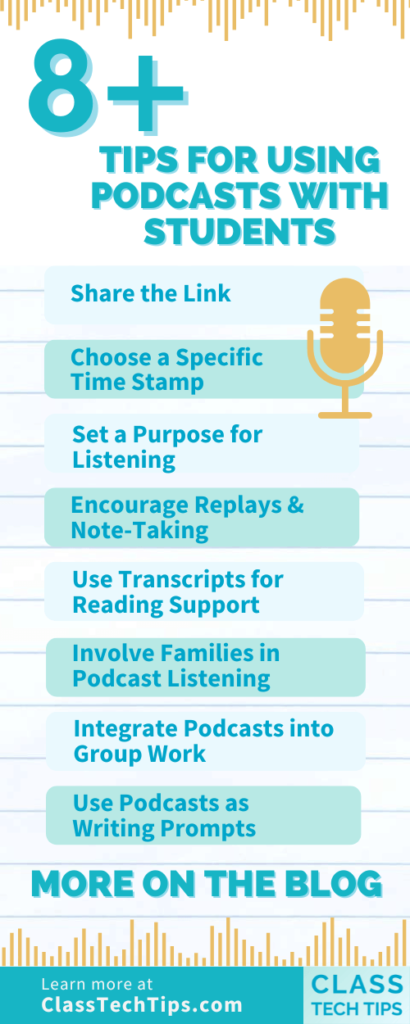
- Circle Round – This podcast shares carefully adapted folktales from around the world, making it perfect for lessons on storytelling, cultural appreciation, and literacy development. And they have coloring book pages to go with each episode!
These are just a couple of great options—there are certainly many educational podcasts available for different age groups and subject areas.
Tips for Using Podcasts with Students
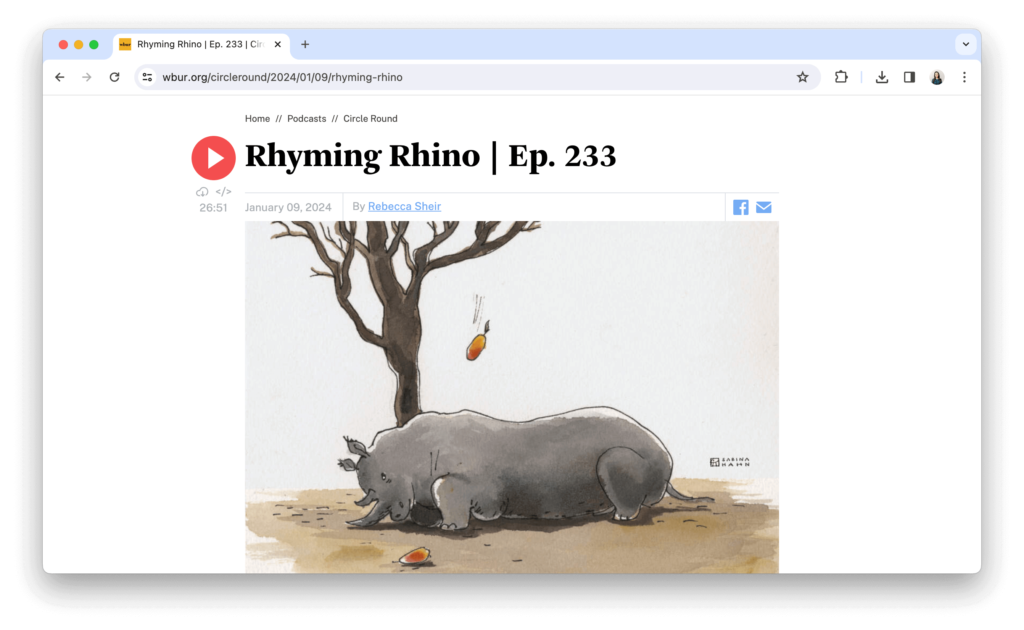
Here are twelve practical tips to help you integrate podcasts into your classroom successfully.
Share the Link
The best way to share a podcast episode with students is by providing the homepage link. This ensures that students and families can access the episode without needing an account or logging in. Instead of sending a link from Apple Podcasts or Spotify, head to the podcast’s homepage and send a link to the episode that way.
For example, instead of sharing this episode straight from Spotify, use the link in the summary or description that takes you to the shownotes page and share that one instead.
Choose a Specific Time Stamp
If an episode is lengthy or contains one particularly relevant section, direct students to a specific time stamp. For example, you might tell students, “Start listening at the five-minute mark,” or use an app like Overcast to share a clip with a timestamp. This is a similar strategy to one you might use with YouTube videos.
Set a Purpose for Listening
When assigning a podcast, give students a clear action item. Whether it’s listening for key details, answering a discussion question, or summarizing the main points, this helps focus their attention. If students are listening independently, you can give this action item or task right next to where you post the link.
Encourage Replays and Note-Taking
Just as students may reread a book passage for better comprehension, they should feel comfortable rewinding and replaying sections of a podcast. Encourage them to take notes on key ideas or interesting details while listening.
This type of listening isn’t something most students do automatically. You will want to model these strategies just like you would model strategies during a read-aloud.
Use Transcripts for Reading Support
Many podcasts offer transcripts that allow students to follow along with the audio. This can be a valuable tool for students who benefit from visual reinforcement of spoken content. Many podcasts include transcripts on their homepage. Some podcast apps like Spotify will play the transcript automatically when you press play on a new episode.
Involve Families in Podcast Listening
Encourage students to listen to podcasts with their families at home. Providing a list of recommended podcasts for car rides, commutes, or evening wind-down time can help extend learning beyond the classroom. You might include a link to a podcast recommendation or a spotlight episode in a monthly newsletter or weekly message to families.
Integrate Podcasts into Group Work
Have students listen to a podcast in small groups and then discuss their takeaways. Assign different groups the same episode with different focus questions or have each group listen to a different episode on a related theme.
Use Podcasts as Writing Prompts
After listening to an episode, have students respond in writing. They can summarize the main idea, write a reflection, or create a fictional story inspired by the topic. Instead of or in addition to writing, you might have them share a reflection using a video response in a tool like Padlet or Seesaw.

Connect Podcasts to Inquiry-Based Learning
Podcasts can serve as a launchpad for student-driven projects. After listening to an episode, encourage students to research a related topic. They can present their research or findings through posters, videos, or blog posts. You might leverage a tool already in your students’ toolbelt, like Adobe Express, Book Creator, or even Google Slides.
Encourage Student-Created Podcasts
Take podcasting to the next level by having students record their own audio content. They can create their own mini-podcast episodes on a topic they’ve researched. There are several options to consider, including GarageBand and Adobe Podcast.

Use Podcasts for Background Knowledge
Before introducing a new unit, share a relevant podcast episode to activate students’ background knowledge. This provides context and sparks curiosity before diving into new material. This strategy might be useful for every student you work with or may just come in handy for a few students.
Make Podcast Listening a Routine
Incorporate podcast listening into your weekly schedule. Whether it’s “Podcast Fridays” or a short listening session at the start of a lesson, make it a regular part of your classroom routine. This will help students develop strong listening skills over time and practice strategies you model for them.
Make it Happen: Using Podcasts with Students
Using podcasts with students can enhance literacy skills, boost engagement, and provide exposure to diverse perspectives. Whether you’re integrating them into small-group discussions, inquiry-based projects, or independent listening activities, podcasts offer a unique way to enrich learning experiences.
For more tips for podcasts and ways to use technology in the classroom, check out the quick reference guide I co-wrote with Pam Allyn. It’s called Engaging Students in Reading of All Text Types and is available from ASCD and Amazon.
Ready to get started using podcasts with students? Try incorporating some of these tips into your next lesson and discover the many ways podcasts can support student learning!