Have you ever finished a lesson and thought, my students need one more text to really understand this? Or wished you had shared a passage to set the stage for the lesson? If you’ve struggled to find high-quality reading passages that fit your curriculum, I have a resource that can help.
When I was a classroom teacher, ReadWorks was one of my go-to spots for supplemental resources. I would search for a nonfiction article to pair with a science or social studies topic, print it out, and share it with students. It was the perfect way for me to find “just right” resources for my class and make sure they had plenty of different types of text to interact with during the school week.
Fast forward several years, and it’s exciting to see how ReadWorks has grown its library of high-quality resources for teachers. And it’s still totally free for you and your students.
Today on the blog, I’m sharing seven ways to use free reading passages for teachers from ReadWorks. These resources can help make the curriculum you already have richer, deeper, and more engaging.
Why Free Reading Passages for Teachers Work Best as a Supplemental Layer
If you are a classroom teacher (or support teachers in your current role), you know they are already juggling a lot. They navigate curriculum maps, standards, and pacing guides. They also make sure every student has what they need throughout the school day. Adding a brand new program on top of all of that isn’t realistic for most classrooms. This is where supplemental resources can make a huge difference.
A well-chosen nonfiction article can build background knowledge before a lesson, reinforce a concept students have already learned, or introduce a related perspective. It can give students another chance to practice reading complex text. And of course it can provide material for discussion, writing, or cross-curricular connections.
The goal isn’t more minutes of reading. It’s more meaningful opportunities to read, connect ideas, and build knowledge. ReadWorks is a nonprofit that offers thousands of free K-12 reading passages, articles, and activities. You can think of it as a way to add another layer to a lesson without redesigning the lesson or adopting a new curriculum.
Explore free reading passages from ReadWorks >>
7 Ways to Use Free Reading Passages with the Curriculum You Already Teach
1. Start with the Alignments Page
If you want to find passages that match your curriculum quickly, the ReadWorks Alignments page is the place to begin. ReadWorks has curated articles to match modules and units across several English Language Arts programs, and the alignments go beyond ELA to include science and social studies, too.
This saves you the step of searching topic by topic. Instead, you can open the alignment for your curriculum, find the unit you’re teaching this month, and pick an article or two that fits.
2. Pair Articles with the Book You’re Teaching
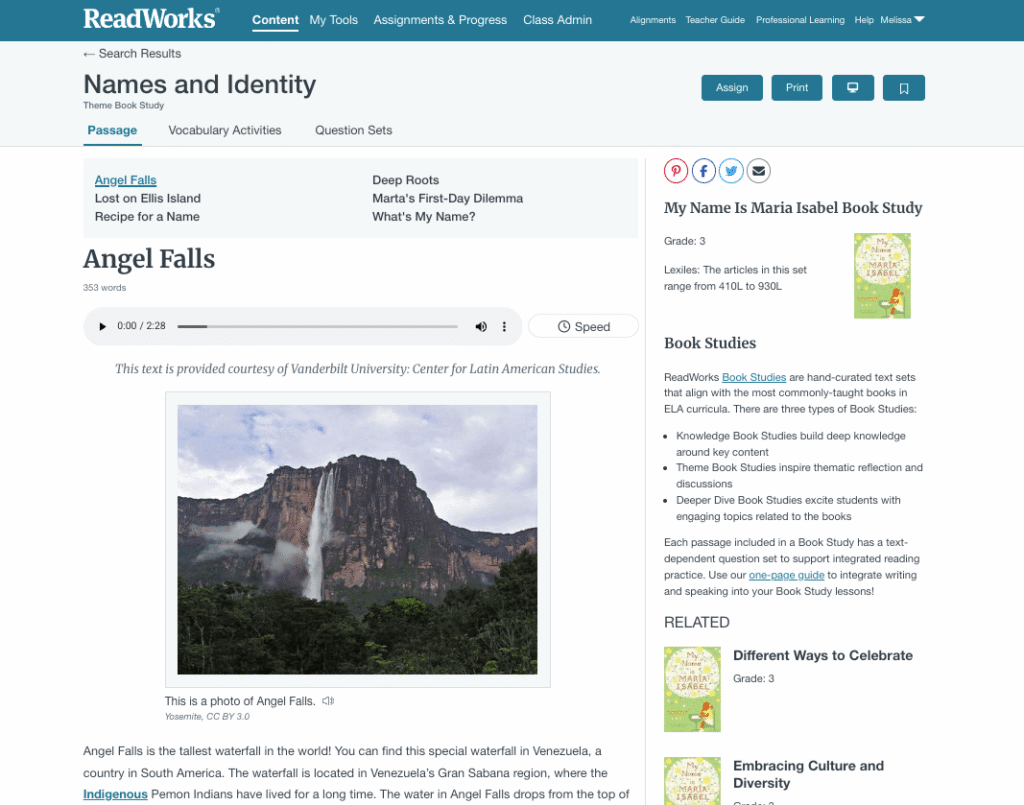
Reading a class novel? The ReadWorks Book Studies let you search for the book you’re teaching and find curated articles that match the book’s topics and themes. Finding paired passages for the texts my class was reading is how I first started using ReadWorks more than a decade ago!
For example, a fifth grade class reading a historical fiction novel could read a nonfiction article about the time period first. Students step into the story with a stronger sense of the setting, vocabulary, and big ideas connected to that time in history.
3. Follow a Scope and Sequence to Go Deeper
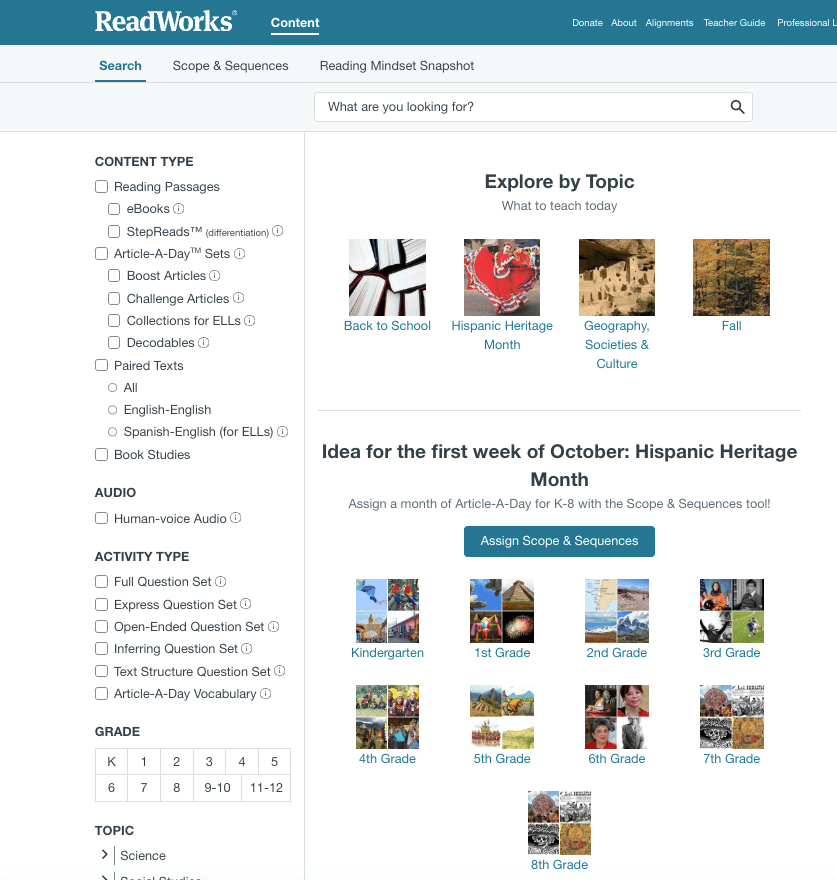
ReadWorks also offers Scope and Sequences organized by season and grade level, and some are organized to match decodable programs, too. These collections group articles and article sets around commonly taught topics. Each topic includes several passages, so students can dig in over a few days.
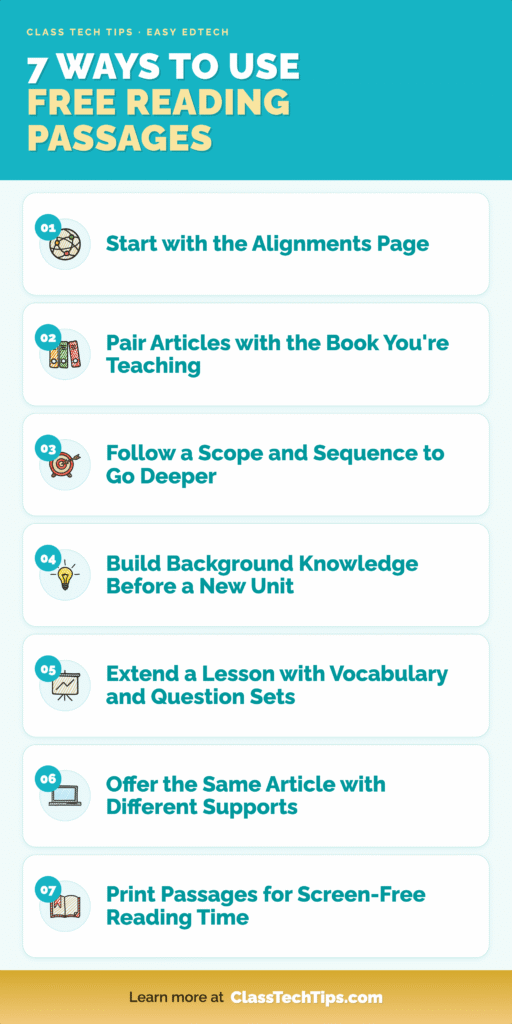
4. Build Background Knowledge Before a New Unit
Background knowledge makes a big difference in how well students understand what they read. Before you kick off a new unit, look for a ReadWorks article that introduces key ideas and vocabulary.
For example, a science teacher about to start a unit on ecosystems could assign a short article on food chains the week before. A social studies teacher could share a passage about daily life in a particular era before diving into the textbook chapter. Either way, students walk into the lesson with a foundation to build on.
5. Extend a Lesson with Vocabulary and Question Sets
Many ReadWorks articles come with question sets, vocabulary support, or a writing activity included. This means you can use a passage for a quick comprehension check, an exit ticket, or a short written response without creating materials from scratch.
When I work with schools and districts, vocabulary is often a big focus area. If vocabulary is a focus in your classroom too, make sure to take a look at Meaning Mapper and Word Detective. Meaning Mapper helps students connect new words to related words and background knowledge using a graphic organizer. Word Detective invites students to investigate prefixes, base words, and suffixes to unlock the meaning of unfamiliar words.
6. Offer the Same Article with Different Supports
Here’s where ReadWorks goes beyond a library of articles. Teachers have free access to built-in differentiation tools. StepReads offer a more accessible version of the same article. This means students can read about the same topic as their classmates with less text complexity. You can also turn on audio for students who benefit from listening. And you’ll find options that let you adjust the font size and use focus tools for students who struggle with visual tracking. You can even pair a passage with one of the ReadWorks graphic organizers.
7. Print Passages for Screen-Free Reading Time
I love that ReadWorks lets you share articles digitally or on paper. You know what’s best for your students, and ReadWorks resources can be printed for screen-free reading time.
Find free reading passages for your next unit on ReadWorks >>
Getting Started with Free Reading Passages for Teachers
You don’t have to replace your curriculum to give students more reading experiences. Look for the places where one additional high-quality text could help students build knowledge, encounter new vocabulary, make connections, or dig deeper into a topic you’re already teaching.
For schools and districts that want to move beyond finding individual articles, ReadWorks also offers Professional Learning. ReadWorks experts work with schools and districts on ways to integrate ReadWorks into their existing curriculum and instructional goals. The focus is on helping teachers make the most of resources they already have instead of adding another program.
Ready to get started today? Start small by picking one unit, searching the Alignments page, and choosing one article to try this week. ReadWorks gives teachers a free, flexible way to do this. Its resources can be used digitally or printed for the classroom. You can sign up for ReadWorks for free today and find passages that fit the way you teach!