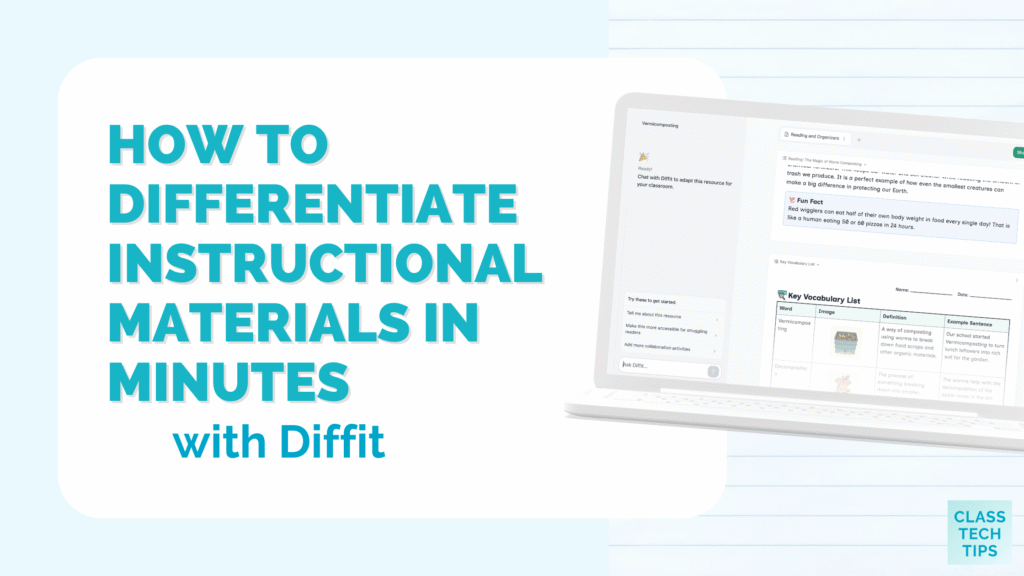
How do you differentiate instructional materials for your students? Differentiation is an important but often time-consuming part of a teacher’s day. When I was teaching fifth grade, I worked with students at a wide range of levels. Every year, I wanted to make sure that my students had “just right” resources, but it was often hard to find or create something that reached every student in my classroom.
When I first came across Diffit a few years ago, I was super impressed with everything it offers teachers. It’s come a long way in a short period of time and gives you oodles of ways to create and differentiate instructional materials for your students. Diffit has made some fantastic updates that really put teachers in the driver’s seat. Instead of typing a prompt and using the first thing that is created, Diffit encourages teachers to use the chat space to refine and design something perfect for their students.
I had the chance to create some custom resources for them this summer and even shared them in a handful of my presentations at the ISTE live conference. Today on the blog, I’m excited to give you access to these remixable activities and take you through some of my favorite features in Diffit.
Differentiation with Diffit for Teachers
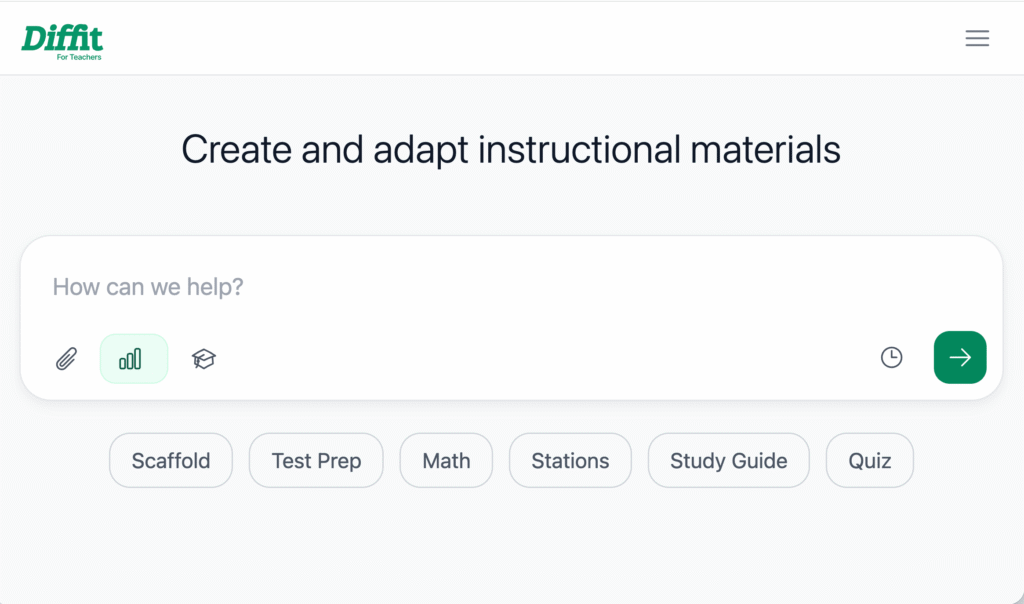
Diffit is built to help you tailor lessons and activities to all of the needs in your classroom. You can make sure the reading, the vocabulary support, and the follow up activities actually meet students where they are. When you first head to the website, you can sign in for free, type in a little bit about what you’re teaching, and ask for resources at the perfect level for your students.
After you create something, you can customize it so that it matches your goals for students. Then you can create versions at different levels and tailor to different student interests.
When Diffit first came on the scene, you simply typed in a topic, picked a grade level, and got back a leveled reading passage with vocabulary, questions, and graphic organizers. That was a real time saver for teachers serving a wide range of reading levels in one room. And it was one of the reasons I always loved sharing it with teachers who were exploring the power and potential of AI in education.
How to Differentiate Instructional Materials
If you open up Diffit, you can absolutely still follow these steps. Type in a topic, drop in a link, upload a PDF, paste in text, or point it at a video, and Diffit will build the reading and the scaffolds around it.
However, Diffit has made some big changes to the way you interact with the platform, and it now includes a full chat experience. Instead of choosing from a fixed menu of outputs, you can have a back and forth conversation about what you actually need. Then keep refining until it fits your vision for what to share with students. For example, you might ask for something to use during a station rotation, a choice board to share with students, or a set of guided notes for your class. You could ask for an exit ticket with an answer key, a decodable reader, a substitute plan, or a chemistry worksheet. Diffit’s quick start prompt list is a good place to see the range of options you have when asking for help creating instructional materials.
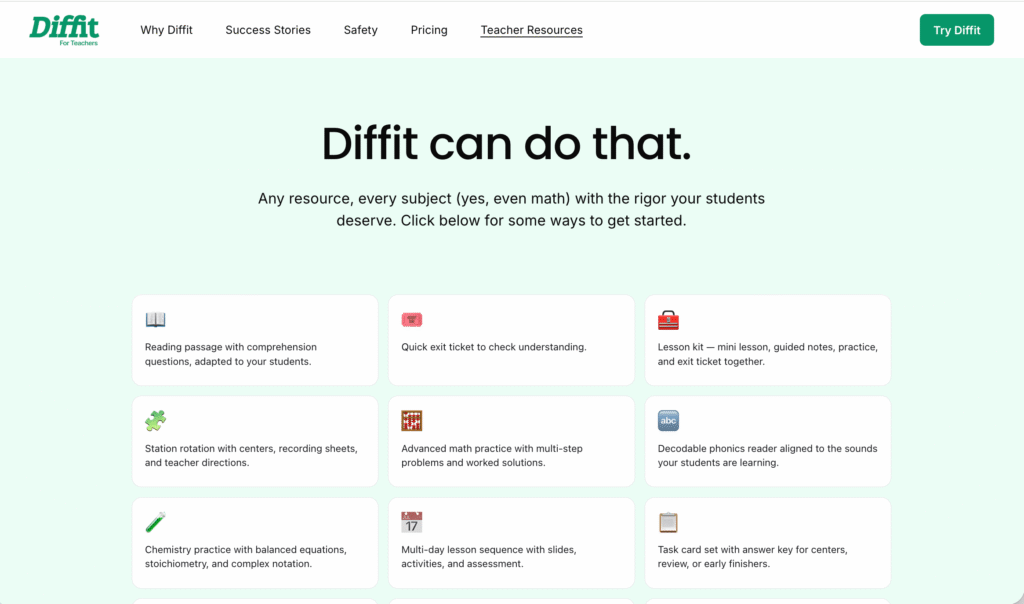
All of the tools that help you differentiate instructional materials are ready for you when you open up Diffit. You can tailor the content by grade level, reading level, language, standards alignment, depth of knowledge for the questions, and more. Everything exports to Google Docs, Slides, Forms, and Classroom, or to Microsoft and PDF, and it all stays editable so you can customize the full experience for students. In the video below, you can see the workflow start to finish.
Learn more about the new Diffit chat experience >>
Two Remixable Diffit Resources You Can Open Right Now
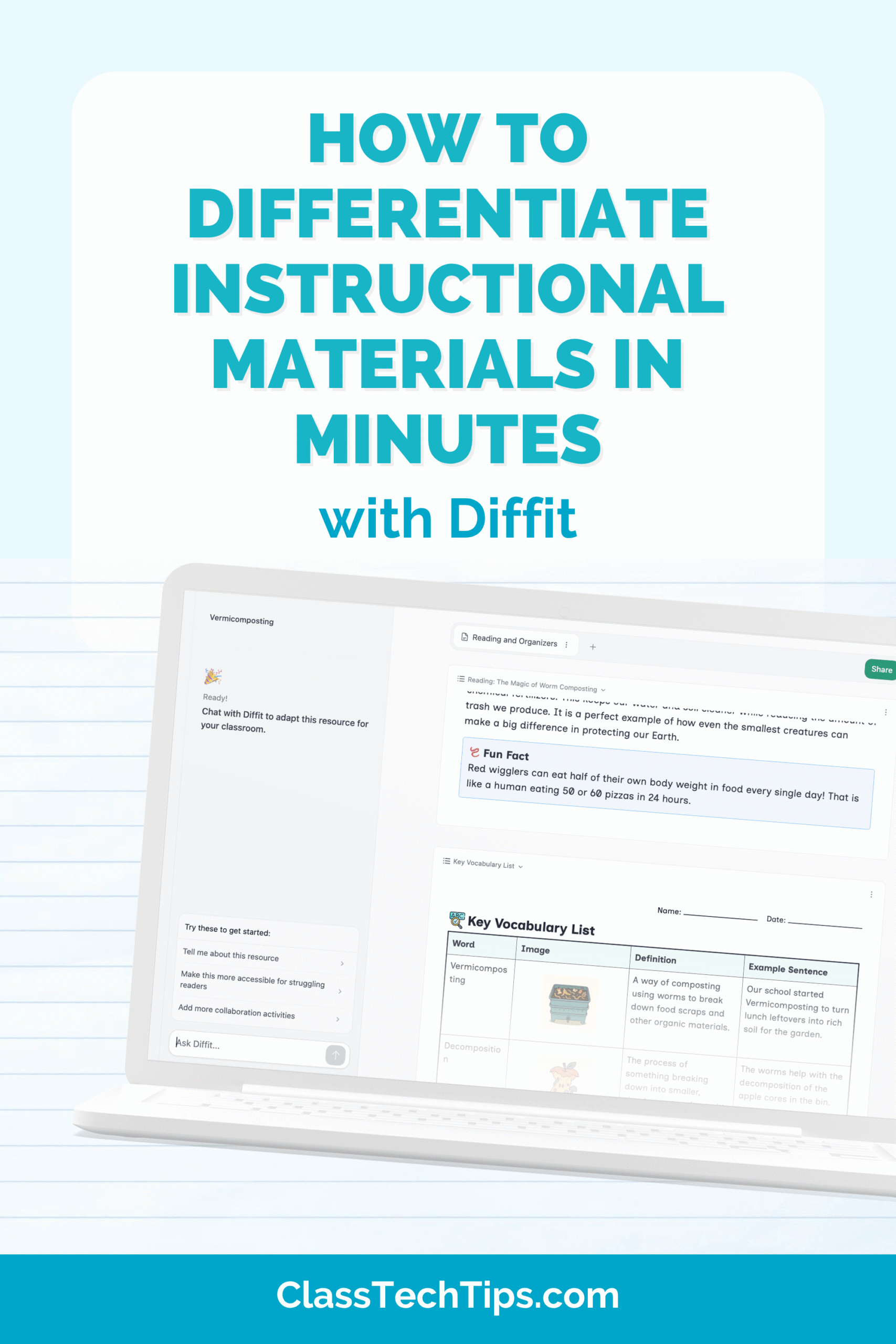
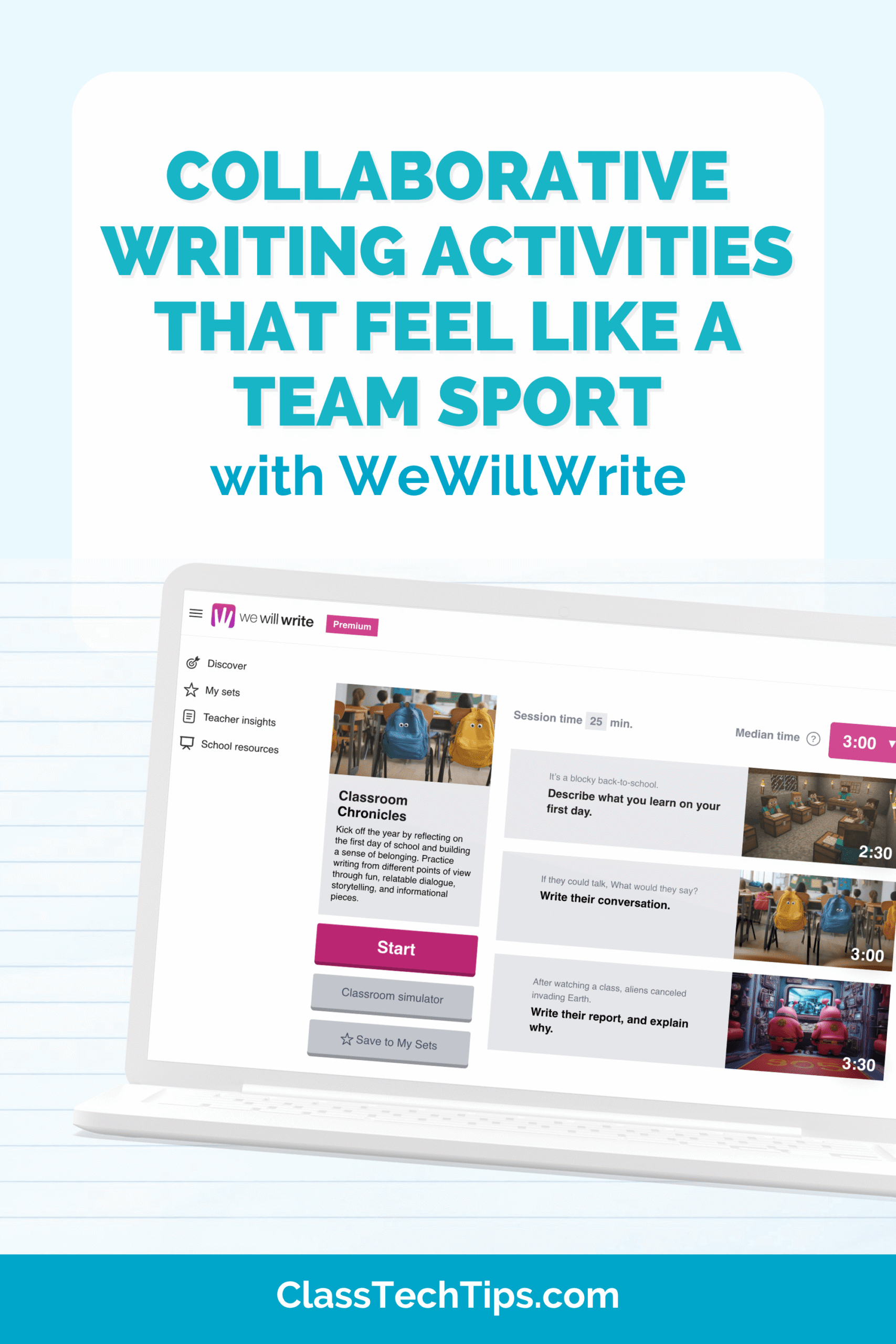
When the Diffit Team reached out to me this spring, I was super excited to get a look at these new updates and jump right in. I put together two resources, and they live on this special Diffit landing page. If you join me for a webinar or workshop, you’ve probably heard me mention vermicomposting in my classroom, and that’s the first adaptable resource you’ll find on this landing page. I also created one related to narrative writing, one of my favorite ELA units to teach as a fifth-grade teacher.
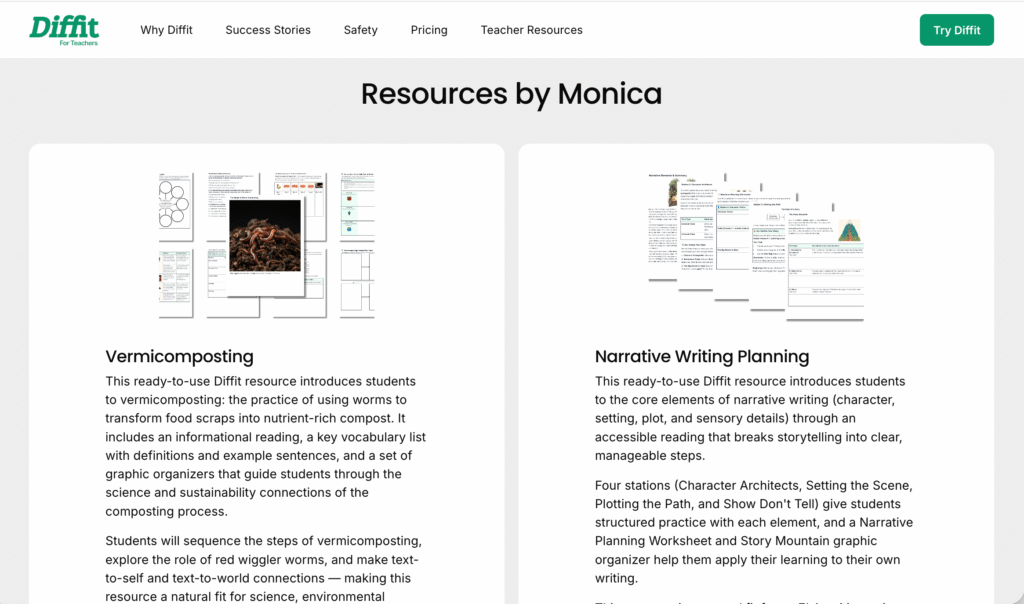
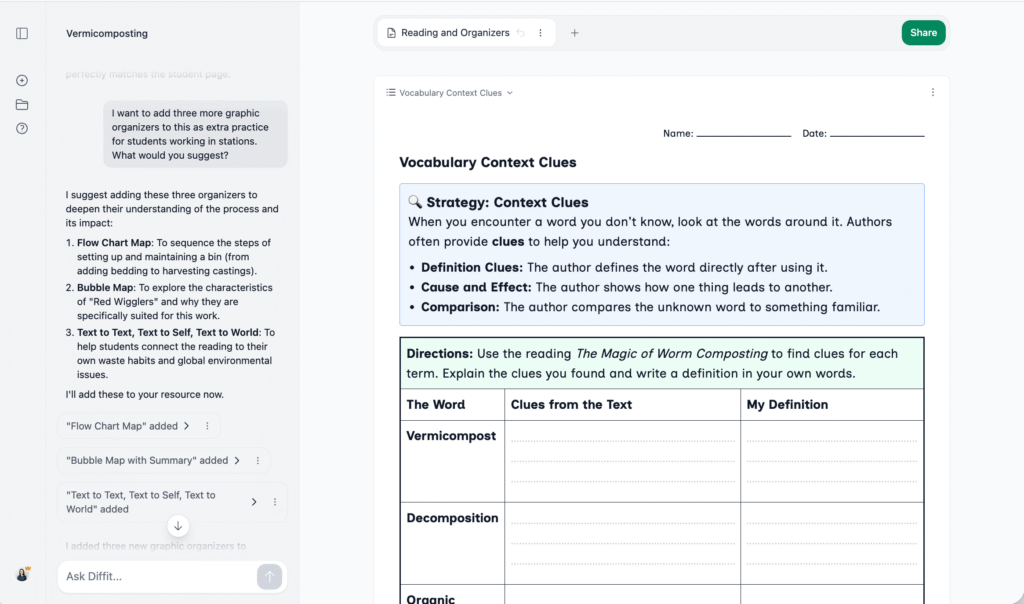
These are not static PDFs you download and print (or share in a digital space). Each one has a View and Adapt button, so you can open the resource inside Diffit and make it your own. You might change the reading level, swap the vocabulary, add a question, or take the structure and point it at a totally different topic. As soon as you open it up, you will see the chat bar on the left-hand side of the screen that lets you request changes and make this the perfect resource to share with your students.
Vermicomposting for Upper Elementary and Middle School Science
This one pulls together science, environmental studies, and sustainability. Inside you will find an informational text on composting with worms, vocabulary definitions with real examples, and a set of graphic organizers.
The organizers walk students through sequencing the steps of the composting process, digging into the role red wiggler worms play, and making text to self and text to world connections. You don’t have to compost in your classroom like I did to make this particular resource useful. If you teach ecosystems, decomposition, or a schoolwide sustainability push, this is ready for you to customize.
Narrative Writing Planning for ELA
This resource breaks storytelling down into the four pieces students most often need help with: character, setting, plot, and sensory details.
You could use these in a station rotation model or give students a choice of which area to explore first. Students build the skill in each station, then move to the planning worksheets and a Story Mountain graphic organizer where they apply all of it to their own writing.
Ready to check these out? Open either one, click View and Adapt, and make it yours.
5 Ways Diffit Can Help You Differentiate Instructional Materials for Back to School
As you head into the new school year, here are five ways you can put Diffit to work in the first few weeks of the year.
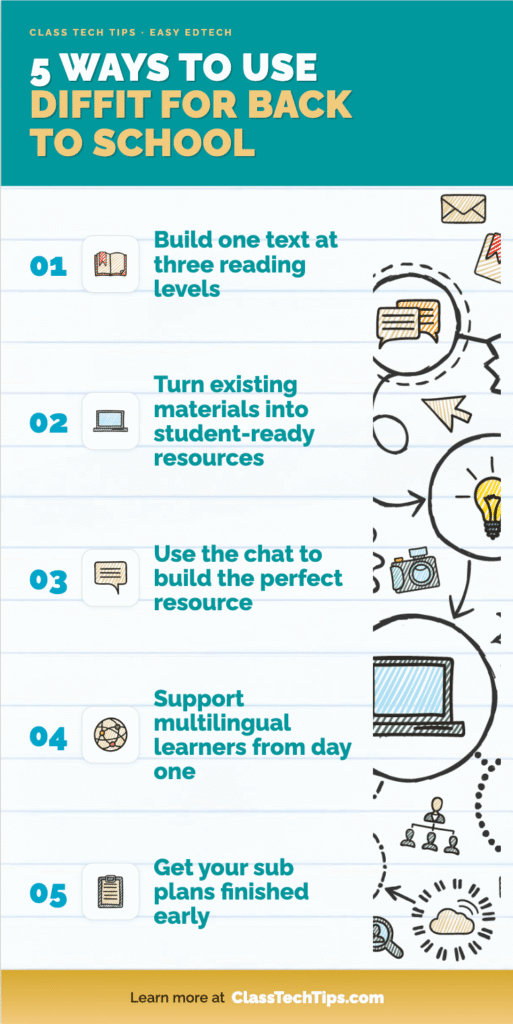
1. Build one text at three reading levels
Choose a topic and generate a text at a few different levels. Every student engages with the same content and the same discussion. They will all have access to text that is at their independent or instructional level.
2. Turn existing materials into student ready resources
Upload the PDF, paste a passage, or drop in the link you already found. Then let Diffit build the vocabulary support, the questions, and the organizers around it.
3. Use the chat to build the perfect resource
This is where the new chat experience shines. Describe your vision for an instructional resource. Once Diffit creates it for you, reply in the chat with your edits and requests.
4. Support multilingual learners from day one
Home language support and scaffolds for English learners are built into Diffit. You can generate resources in different languages.
5. Get your sub plans finished early
Build a sub folder before you need it with Diffit. Create content that connects to a topic students will learn about in the first half of the year. Then save it to a folder to easily share (if needed).
Try Diffit free and start building your back to school resources >>
Getting Started with Diffit for Teachers
Ready to differentiate instructional materials with a little help this school year? Pick one lesson in your first unit (or something you’ll teach in the first few weeks of school). Then, open the chat, and describe what you want to share with students. Make a few refinements until it is ready for your class. Or try out my adaptable lessons (you can find both on this page).
Try Diffit for free today! And readers of this blog can use the code MONICABURNS for 60 days free.