Do you remember the first time someone talked with you about money? For a lot of us, that conversation didn’t happen in a classroom. And if you’re wondering how to fit personal finance into an already packed school day, you’re not alone.
When I taught fifth grade, I always believed personal finance was important, but it wasn’t included in my core curriculum. There were a few years when I invited guest speakers into my classroom to talk to my students about personal finance topics, but these one-time events aren’t the same as having a dedicated set of resources. Earlier this year, I connected with the team at FitMoney and I’m super excited to share their curriculum with you.
Today on the blog, we’ll take a look at how FitMoney’s free personal finance curriculum helps K-12 teachers bring money skills into the classroom. They have ready-to-use lessons, digital tools for students, and resources for families, too.
Why a Personal Finance Curriculum Matters Now
Personal finance is getting more attention in schools and districts across the country. The FitMoney team shared some data with me from the Council for Economic Education. Right now, 26 states require a standalone personal finance course, and 13 states require personal finance to be integrated into another course. Most of these requirements focus on high school, but speaking as someone who taught in elementary, I know it can certainly have a place in the lower grades.
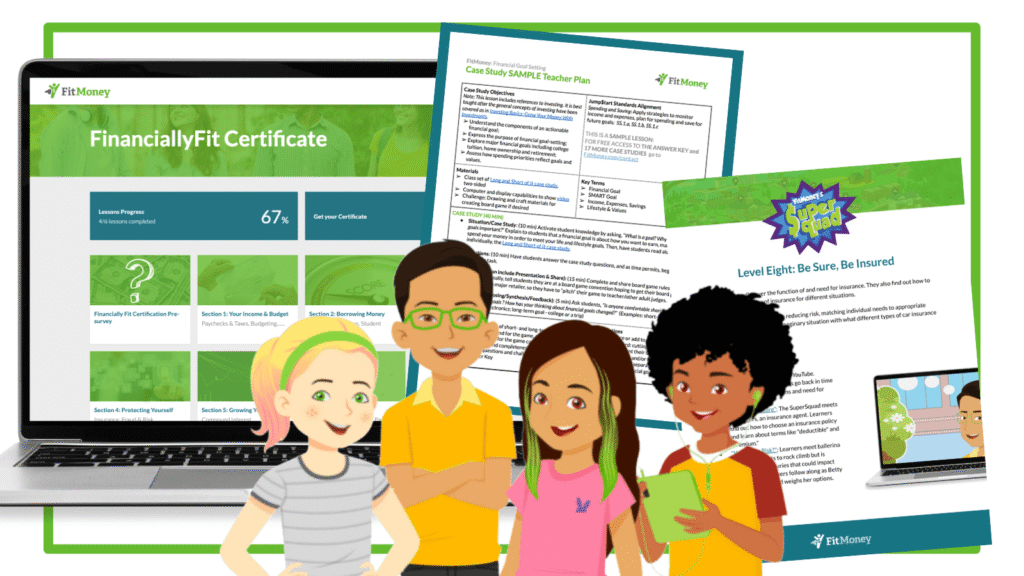
Elementary and middle school students already make decisions about wants and needs, save up for something special, and notice how their families plan for expenses. FitMoney is one of the few providers offering a comprehensive curriculum and digital tools for students in grades K-8, along with resources for high school.
A few states like New York and Pennsylvania have upcoming requirements for personal finance instruction in grades K-8, too. FitMoney has created alignment documents for the New York and Pennsylvania standards and continues to expand its alignment documentation to support state specific standards-aligned teaching.
What’s Inside FitMoney’s Personal Finance Curriculum
FitMoney’s in-class curriculum is ready to use out of the box. It includes lesson plans, teacher guides, slide decks, worksheets, assessments, and family conversation guides. You don’t have to build a unit from scratch, and you can still customize the resources so they are the right fit for your group of students.
Here’s a quick look at how it’s organized:
- Elementary (K-5): 5-6 one-hour math-aligned lessons per grade
- Middle school: 19 real-life scenarios in 40-minute lessons
- High school: 27 one-hour lessons across four project-based units
What might this look like in action? If you teach third grade, you could use a FitMoney lesson in the spring to review the addition and subtraction skills your students practiced all year. This way, personal finance feels like part of math class instead of one more thing to squeeze in. A middle school teacher could use a real-life scenario to spark discussion about a first job or a phone plan. And of course, a high school teacher might choose one of the four project-based units to kick off a new semester.
Many elementary teachers use FitMoney’s K-5 lessons after state testing or in the last few weeks of the school year, once all of their math standards have been taught. The FitMoney team built the elementary curriculum with this timing in mind, so the lessons double as an engaging way to review key math concepts. If you’ve ever tried to keep students focused in May or June, you know how much a fresh, real-world angle on familiar skills can help.
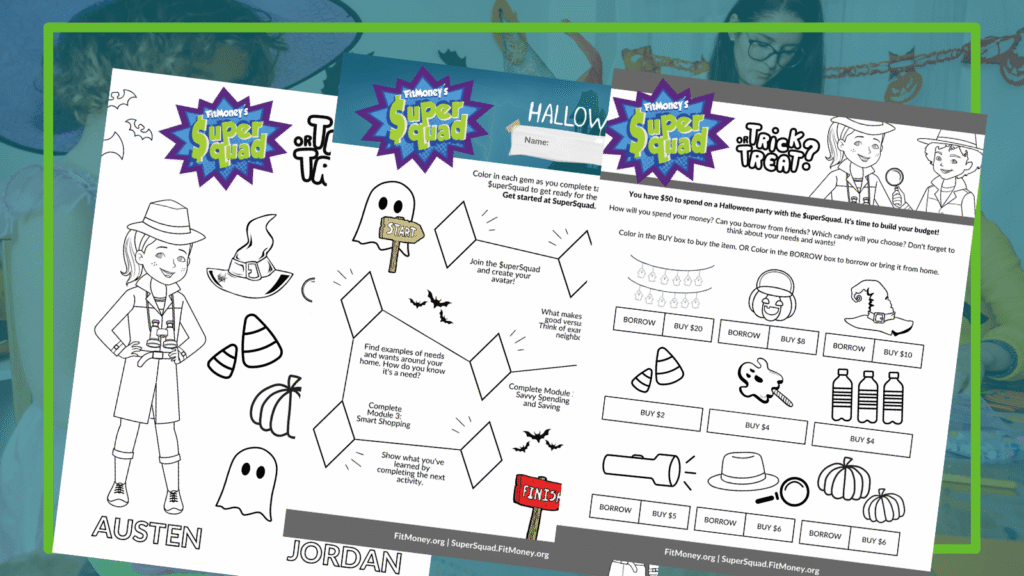
FitMoney’s materials are always free to schools and nonprofits (and they even have some special resources for Halloween). Explore FitMoney’s free materials on Home Base >>
Digital Personal Finance Resources for Students & Families
Along with the in-class curriculum, FitMoney offers digital tools students can use in school or at home.
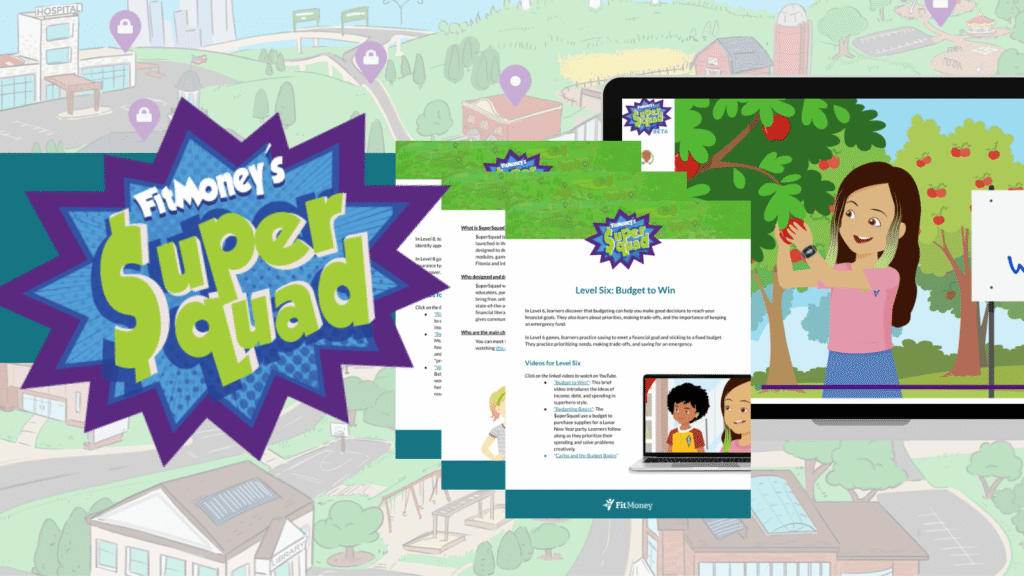
$uperSquad for Elementary Students
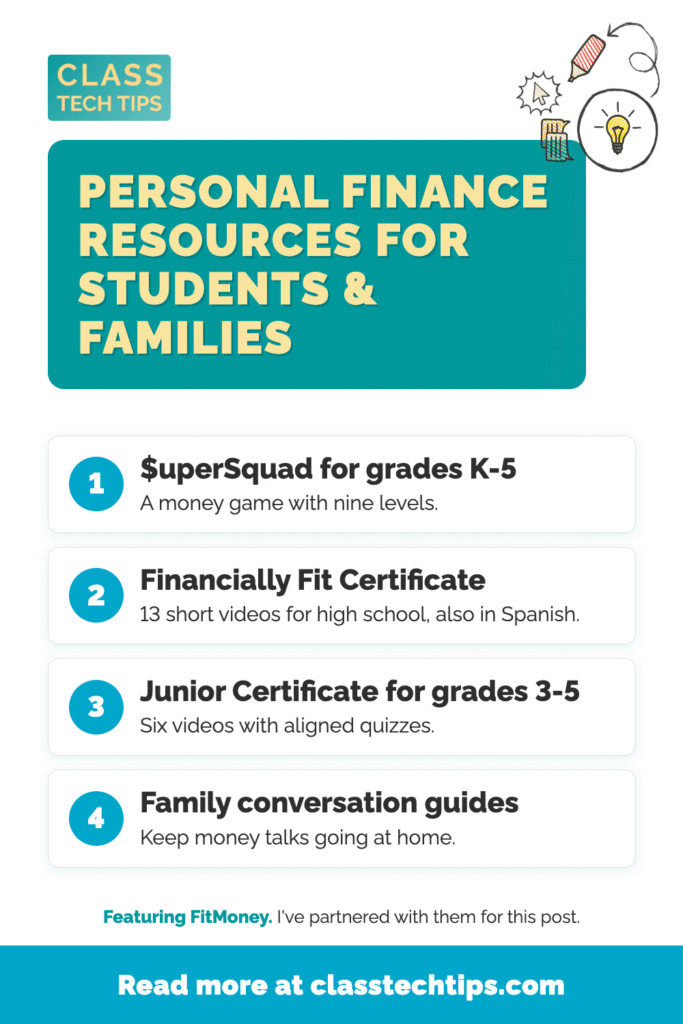
$uperSquad is a game-based platform for students in grades K-5. With nine levels, students work through real-world financial decisions in a format that feels like a game. A second grader could explore it during a center rotation, and families can keep the learning going at home. You can watch the $uperSquad game trailer to get a feel for it.
Financially Fit Certificate for High School
The Financially Fit Certificate is designed for high school students and includes 13 short videos. They are about five to ten minutes each, with embedded check-for-understanding questions along the way. It’s also available entirely in Spanish. In New Hampshire, the certificate is worth a quarter high school credit. In Pennsylvania, it serves as a non-technical Industry Recognized Credential. For students in grades 3-5, the Junior Certificate includes six videos with aligned quizzes. It’s a nice fit for upper elementary teachers who want a structured path through key money topics.
Get started with the Financially Fit Certificate from FitMoney >>
Bringing Families into the Conversation
FitMoney’s family conversation guides give students a way to bring what they’re learning in school back home. They also give caregivers a simple place to start talking about personal finance with their children. You might add a quick note about your personal finance unit to your next family update. You can even attach a family guide so the conversation can continue at the dinner table, car ride home, or walk to the supermarket.
Getting Started with FitMoney’s Personal Finance Curriculum
Whether you teach kindergarten or high school, a personal finance curriculum doesn’t have to feel like one more thing on your to-do list. Start by picking one lesson, trying one $uperSquad level with your class, or previewing the certificate program.
All of FitMoney’s digital tools have single sign-on through Google, Clever, and ClassLink, so students can log in quickly and start exploring. Teachers can create classes, assign programs, and track student progress and completion from a teacher dashboard. You can also download completed certificates. This makes it easy to celebrate student progress with your class or share it with families.
Visit FitMoney’s Home Base and sign up to get immediate access to all of FitMoney’s free materials. If you have questions or want professional development support, reach out to the FitMoney Educator team at teachers@fitmoney.org.